The Official Map ·
Edition 2026

Old Montréal

Every attraction in the historic quarter on a single fold. Free PDF with a dedicated night-lights walking circuit.
400K+
Copies distributed
1995
In print since
Ulysse
Québec Tourism Award
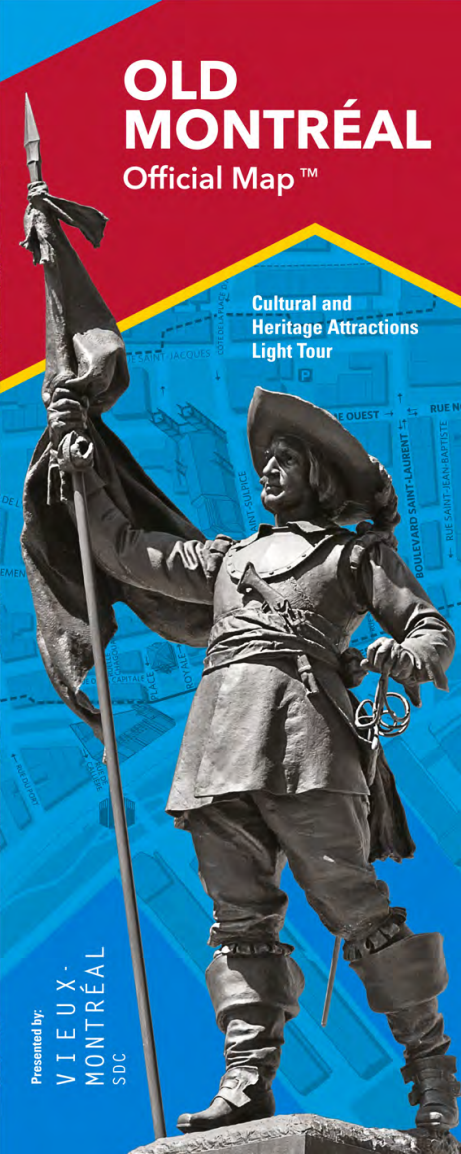
Old Montreal Official Map Cultural and Heritage Attractions
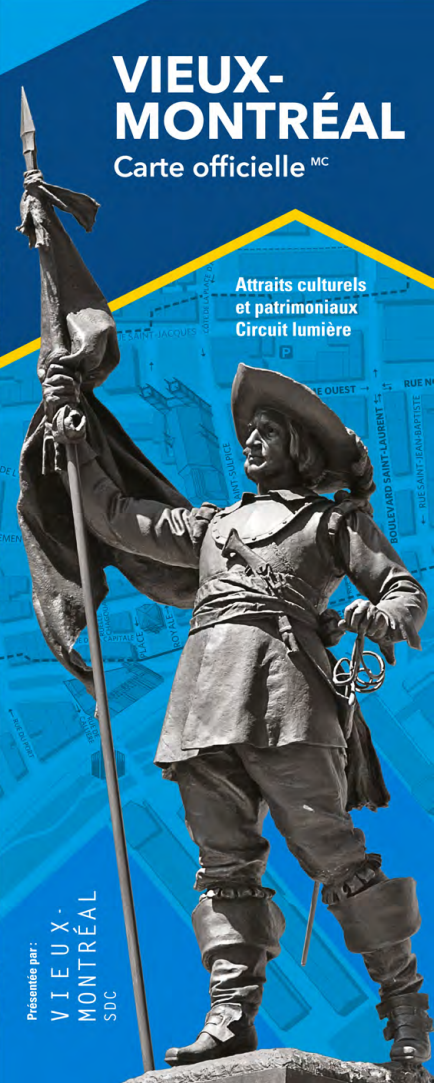
Carte officielle du Vieux-Montréal Attraits culturels et patrimoniaux
What's inside

Everything inside one fold

Heritage & Cultural Attractions

Every museum, church and gallery in the quarter, with current hours and admission.

Night-Lights Walking Circuit

A dedicated circuit through the most beautifully illuminated buildings and facades in the quarter, especially striking after dark.

Local Events Calendar

Key cultural events and seasonal programming in the historic quarter, updated fresh with each new edition.

Squares & Landmarks

Place Jacques-Cartier, Bonsecours, Notre-Dame and every iconic landmark in the quarter, each precisely pinned.

Free PDF Download

The complete official map in high resolution, ready to save, print, or share before your visit.

Pedestrian Street Map

Every street, lane, and public square at walking scale, clear enough to fold open and follow on the go.

The paper version, everywhere you look

Pick one up free at the Tourist Information Centre in Place Jacques-Cartier, or at your hotel concierge desk.

Created over 30 years ago, the map won a Ulysse award as part of the Québec Tourism Awards.

Ulysse AwardQuébec Tourism Awards
Place Jacques-Cartier Bonsecours Market Jardin Nelson Montreal Convention Centre Hotel concierges
About Old Montréal

Old Montréal: one of North America's most intact historic quarters

Old Montréal is where the city began. The streets still follow the same grid that French colonists laid out in the 1600s.

Stretching along the St. Lawrence River, the quarter, known in French as Vieux-Montréal, covers roughly one square kilometre of cobblestone streets, 17th-century stone buildings, and public squares that have hosted four centuries of city life. Walking through it feels genuinely different from the rest of the city, because it is. The architecture is protected under Quebec's cultural heritage laws, which means the facades you see today are largely the same ones that merchants, clergy, and travellers would have passed in the 18th and 19th centuries.

The area sits at the intersection of New France history and contemporary Montréal culture. The Pointe-à-Callière archaeology museum stands on the very spot where the city was founded in 1642. A few blocks away, the Notre-Dame Basilica anchors Place d'Armes with its neo-Gothic towers visible from across the waterfront. The Old Port connects the quarter to the river with a long promenade that runs from the Jacques-Cartier Bridge to the Lachine Canal.

Most visitors discover that Old Montréal is compact enough to cover on foot in a single day, but layered enough to reward several visits. The official walking map was designed with exactly that in mind: every street at a scale you can read while walking, with every major attraction marked and a dedicated circuit for exploring the quarter after dark.

1642
Year the city of Montréal was founded, on what is now Place Royale in Old Montréal
1 km²
Area of the historic quarter, compact enough to explore entirely on foot
400+
Heritage buildings protected under Quebec's Cultural Heritage Act
FAQ

Frequently asked questions about Old Montréal and the map

Everything visitors ask before their trip to Old Montréal.

Yes, completely free. The PDF version on this site costs nothing and requires no registration. The paper edition distributed across the quarter is also free. It has always been available at no cost to visitors, which is part of why over 400,000 copies are picked up each year.
Paper copies are available at the Tourist Information Centre on Place Jacques-Cartier, at the Bonsecours Market, at Jardin Nelson, at the Montréal Convention Centre, and at hotel concierge desks throughout the quarter. Most display stands are restocked regularly throughout the tourism season. If you want to have a copy before you arrive, you can download the PDF here and print it at home.
Yes. The French edition is published under the name Carte officielle du Vieux-Montréal and is available at cartevieuxmontreal.ca. Both editions cover the same attractions and walking circuits, but the French version uses French street names and location labels throughout.
The night-lights circuit is a dedicated walking route printed on the map that guides visitors through the most beautifully illuminated buildings and facades in the quarter after dark. Old Montréal has invested heavily in architectural lighting on its historic buildings, and the circuit connects those highlights in a logical walking order so you can experience the quarter at its most atmospheric without any planning.
The map is updated every year. The 2026 edition reflects current business hours, seasonal events, and any changes to attractions in the quarter. If you have an older edition, it is worth downloading the new PDF before your visit since hours and some listings do change from year to year.
Yes. The PDF is high resolution and prints clearly on standard letter or A4 paper. For the best result, print at full size and in colour if possible. The map is designed to fold down to a pocket size, so if you print on both sides you can fold it the same way as the paper edition you would pick up in the quarter.
Walking the full perimeter of the quarter takes about 45 minutes at a relaxed pace. Most visitors spend between two and four hours to cover the main attractions: Place Jacques-Cartier, the Notre-Dame Basilica, the Old Port promenade, and Bonsecours Market. A full day with museum visits and a meal is a comfortable way to see everything without rushing.
The map is published by Pop Media, in partnership with the Vieux-Montréal SDC (Société de développement commercial). It has been in continuous print since 1995 and won a Ulysse Award as part of the Québec Tourism Awards. Pop Media handles all annual updates and distribution across the quarter.
Old Montréal is known for being one of the best-preserved historic quarters in North America. Its cobblestone streets, 17th-century stone buildings, and landmarks like the Notre-Dame Basilica, the Pointe-à-Callière museum, Bonsecours Market, and the Old Port waterfront attract millions of visitors each year.
The most popular activities include visiting the Notre-Dame Basilica, exploring the Pointe-à-Callière Museum on the founding site of the city, strolling the Old Port promenade, and following the night-lights walking circuit after dark. The quarter also has some of Montréal's best restaurants and easy access to the Lachine Canal cycling path.
Old Montréal is accessible by metro (Square-Victoria–OACI or Champ-de-Mars stations on the Orange Line), by bus, or on foot from downtown Montréal in about 15 minutes. Several paid parking lots are available in the quarter. In summer, water taxi services also operate along the waterfront.

The full quarter, on one page

The same map found at every hotel desk in the quarter, as a free PDF, ready before you arrive.